Agentic AI is like Gardening - Probably...
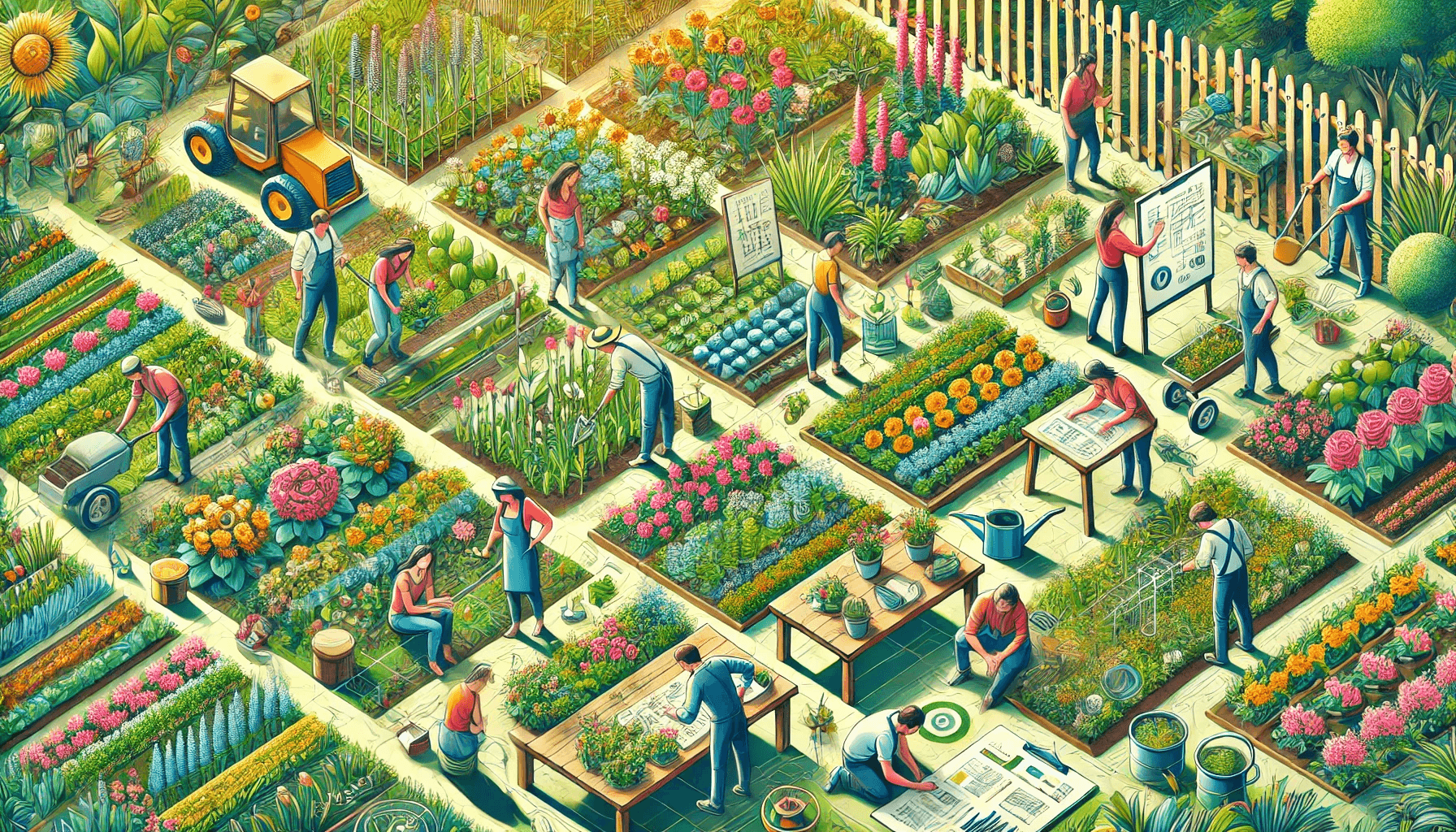
I love my neighborhood. We are a tightly knit community with a massive generational span. Many of my neighbors are avid gardeners. Our cluster community falls short when it comes to yards, so much of life is lived outside in public view. My wife and I are an embarrassment when it comes to keeping our plants alive, or I should say we used to be. We have come a long way. Watching and talking to neighbors, walking through their extraordinary gardens laid out with the utmost detail, coupled with our own desire to expose our kids to playing in the dirt and to help them get a more intuitive understanding of where food comes from, has been transformative. Having literally no yard, we have had to learn things like garden plans, container gardening, and more.
So what do the best gardeners do? At least the ones I know? They start with a plan -- a literal drawing that sketches out where their hardscaping will go and what plants will go where, how they will change with the seasons. They cultivate and plant, curating the best plants for the soil conditions and sun. They are constantly learning and curious, working through this process by combining experience and ongoing education. They iterate. Not every plant survives or does what you expect. It seems the best gardens are set up to flourish with little input, but once established, the gardener knows when to split or thin out, when to replace, and experiments their way through the process. They cannot be rigid; it's a collaborative experience. They have to plan for the future but must be willing to pivot.
In agentic design, we also start with a plan. This plan outlines how we organize the agents, what their jobs are, and how they will interact with the world -- whether through conversational experiences, automation, or other frameworks. This initial blueprint is crucial as it sets the stage for the entire system, much like a garden's layout.
Next, we select our "plants" -- the foundational models and frameworks that will become our agents. Just as gardeners choose plants based on soil and sunlight conditions, we pick the most suitable models and frameworks for the tasks at hand. This involves careful consideration of the agents' roles, the data they will process, and the environments they will operate in.
Once planted, the finesse comes into play. This is akin to the finesse of instructional tuning in agentic design. We tweak the parameters, design the prompts, and fine-tune the instructions to ensure the agents perform optimally. Like adjusting a plant's location for better sunlight or water access, we constantly refine our agents to improve their efficiency and effectiveness.
Iteration is key in both gardening and agentic design. In a garden, not every plant thrives; some need to be replaced or moved to a better spot. Similarly, not every agent will perform perfectly on the first try. Continuous adjustments, testing, and refinements are essential. We must be ready to replace underperforming components and experiment our way through the process to ensure that the system remains robust and effective.
Collaboration and flexibility are vital. Just as gardeners must be open to changing their plans based on weather conditions or plant performance, developers must adapt to new data, changing user needs, and evolving technological landscapes. This flexibility ensures that the agents can continue to grow and perform optimally in a dynamic environment.
Planning for the future is another shared aspect. Gardeners plant with the seasons in mind, anticipating how their garden will evolve and what it will need to thrive. In agentic design, we must also look ahead, planning for scalability, future updates, and potential integrations. However, this foresight must be balanced with the ability to pivot when necessary, adapting to unforeseen challenges and opportunities.
But the real parallel to me is the emotional and attitudinal similarities. Both gardening and designing agents require patience, resilience, and a love for the process. Gardening connects us to the dirt and the roots that can transform those amazing nutrients and minerals into life, organizing itself either for the beauty of it, or for our sustenance, or both. Gen AI and Agentic Systems in particular connect us to language and mimic organizational systems and collaboration through that language in a way that creates something new. Though you have an incredible amount of control over those early decisions -- that is to say, where to plant and whether to plant, or what to build and whether to do it -- how they evolve and behave is somewhat out of your control.
I expect the gardeners out there to be building some of the coolest agentic systems in the future. In fact, I am counting on it.
Get insights like this delivered
Join leaders navigating AI governance and agentic systems.