Building Software With My Son

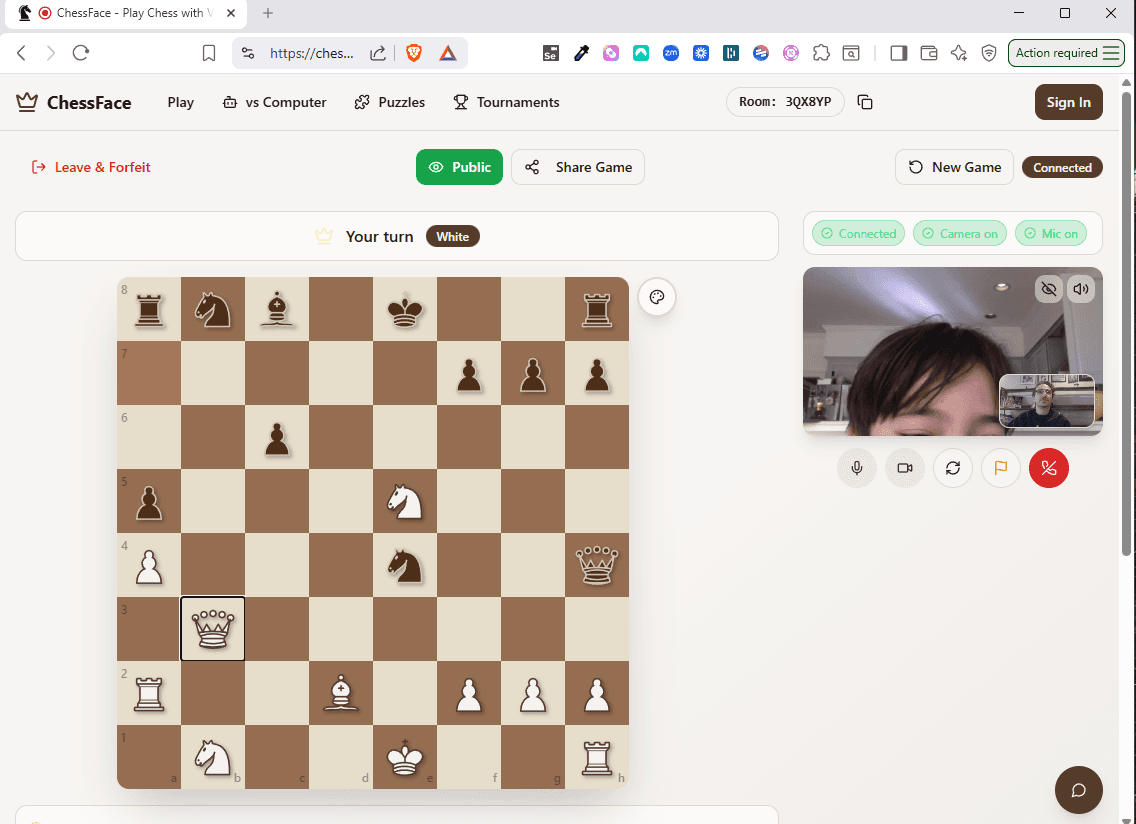
In January, on a snow day (ice and rain, really), my son and I built a tiny chess app so he could play his grandpa, with live video and audio instead of bots and timers.
I keep coming back to that weekend, because of what happened after the fancy part.
The fancy part took a few hours. Then came the questions. "How do we add a clock?" "How do we make the board easier for grandpa to read?" "How do we make it easier to join?" "What if friends could jump in?"
None of those questions are about code. They're about noticing a need, saying clearly what you want, testing it with a real person and making it better.
Here's my prediction for the engineering profession. When the cost of building collapses, the scarce skills shift:
- Noticing the real problem, for a real person.
- Specifying it clearly enough that a machine can act on it.
- Testing against reality, not the demo.
- Knowing when the output is wrong.
At the time I called kids like mine value natives. When building gets cheap, you go back to first principles: find a problem, solve it, test it, improve it.
The engineers who thrive won't be the ones who type fastest. They'll be the ones who can direct, question and judge.
My son wasn't learning to code that weekend. He was learning the loop. I'm not sure the rest of us have caught up yet.
What are you teaching your kids, or your juniors, about building with AI?
Get insights like this delivered
Join leaders navigating AI governance and agentic systems.