Forget AI, this is a language thing...
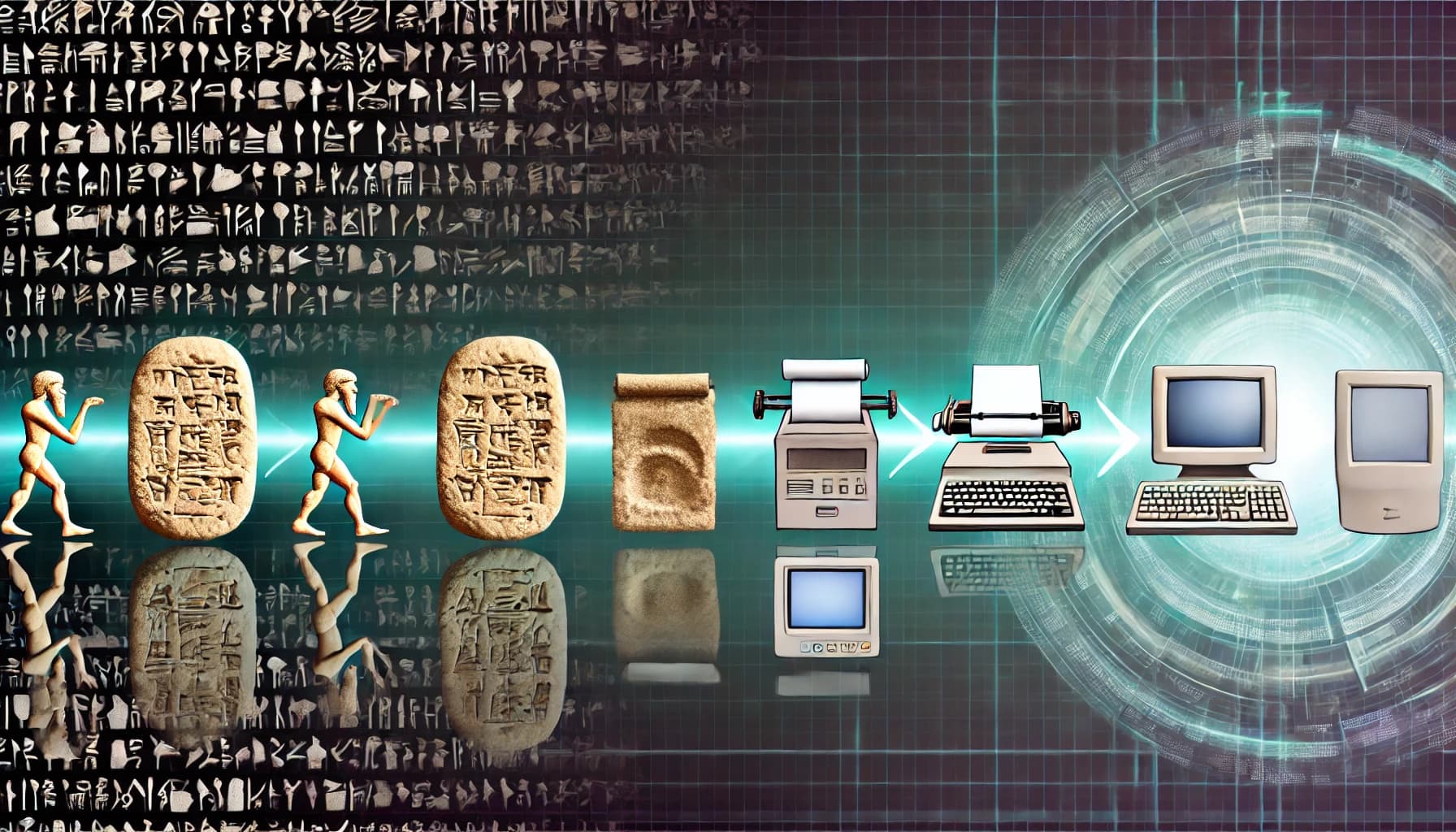
Language has always played a crucial role in advancing human civilization. Throughout history, we have witnessed significant breakthroughs brought about by innovations in communication, such as the invention of cuneiform and the printing press. These revolutionary advancements enabled the dissemination of knowledge and the coordination of complex tasks, ultimately leading to the progress of societies. However, with the rise of Language Model Models (LLMs) in today's technological landscape, the dynamics of communication and organization are undergoing a paradigm shift. This article aims to explore the implications of this shift and the potential consequences of prioritizing abundant moderating technology over simplification and prioritization of communication.
The Biggest Steps Forward in Human History Came Through Language Innovation Like Cuneiform and the Printing Press
From the earliest days of human civilization, the development of language and written communication has played a pivotal role in societal progress. Ancient civilizations, such as the Sumerians, introduced cuneiform, a system of writing on clay tablets that revolutionized record-keeping and communication. This innovation allowed for the preservation and sharing of knowledge across generations, enabling the accumulation of wisdom and advancements in various fields.
Similarly, the invention of the printing press in the 15th century by Johannes Gutenberg transformed the world. This groundbreaking technology made books and information accessible to a wider audience, breaking the monopoly of knowledge held by a select few. The printing press spurred the Renaissance, Reformation, and Scientific Revolution, ushering in an era of exponential growth in human understanding and achievements.
Organizational Systems Built to Manage Culture, Routines, Process, and Ultimately Coordination Between Complex Specializations to Create Value
Throughout history, organizational systems have emerged to manage the complexities of societies. These systems are designed to facilitate coordination, collaboration, and the creation of value through the management of culture, routines, and processes. Language has been the cornerstone of these systems, allowing for effective communication and knowledge transfer among individuals with specialized expertise.
Whether it be ancient bureaucracies, medieval guilds, or modern corporations, the core function of these organizational systems has been the simplification and prioritization of communication. Clear language, standardized procedures, and hierarchical structures have been essential in ensuring that individuals within these systems understand their roles, responsibilities, and objectives. This language-centered approach has been crucial for fostering efficiency and enabling organizations to navigate the complexities of an interconnected world.
LLMs Completely Change the Dynamic
What happens in a world where simplification and prioritization of communication is not the core function of organization or culture, but abundant moderating technology?
With the advent of Language Model Models (LLMs) and abundant moderating technology, the dynamics of communication and organization may be undergoing a profound transformation. LLMs, powered by artificial intelligence, have the ability to generate human-like text, revolutionizing the way we communicate and process information. These models can analyze vast amounts of data, draw insights, and generate responses that mimic human language patterns.
In this new world, the core function of organization and culture may no longer solely rely on the simplification and prioritization of communication. Instead, the focus may shift towards leveraging the power of LLMs to moderate and manage information overload. While this may offer advantages in terms of efficiency and decision-making, there are potential risks of over-reliance on technology and the loss of human connection.
As we navigate the ever-evolving landscape of language and technology, it is crucial to recognize the historical significance of language innovations and their role in advancing human civilization. While LLMs and abundant moderating technology present exciting possibilities, we must also remain mindful of the importance of human-centric communication and the potential challenges that arise when technology becomes the primary mediator of our interactions. The balance between embracing technological advancements and preserving the essence of human connection is key to navigating the complexities of this new era.
Get insights like this delivered
Join leaders navigating AI governance and agentic systems.